Showcase · AI inside a real workflow

Offlot.
An AI-native campaign workflow for used-car dealers.

Offlot connects VIN-photo reading, number-plate detection and channel-specific copy generation to a complete dealer workflow: vehicles, campaigns, calendar, public vehicle pages and leads. This is a product build, not a customer success claim.

What this build proves

  • AI is part of the product flow: Three concrete AI pipeline steps are wired into domain workflows: VIN photo reading, number-plate detection and channel copy generation.
  • Structured data comes first: The vehicle model combines decoded VIN facts with the small set of details a VIN cannot know, instead of asking a dealer to retype everything.
  • One vehicle, different channels: The channel catalog carries format, length, tone and image requirements, so generated copy is shaped for the selected channel.
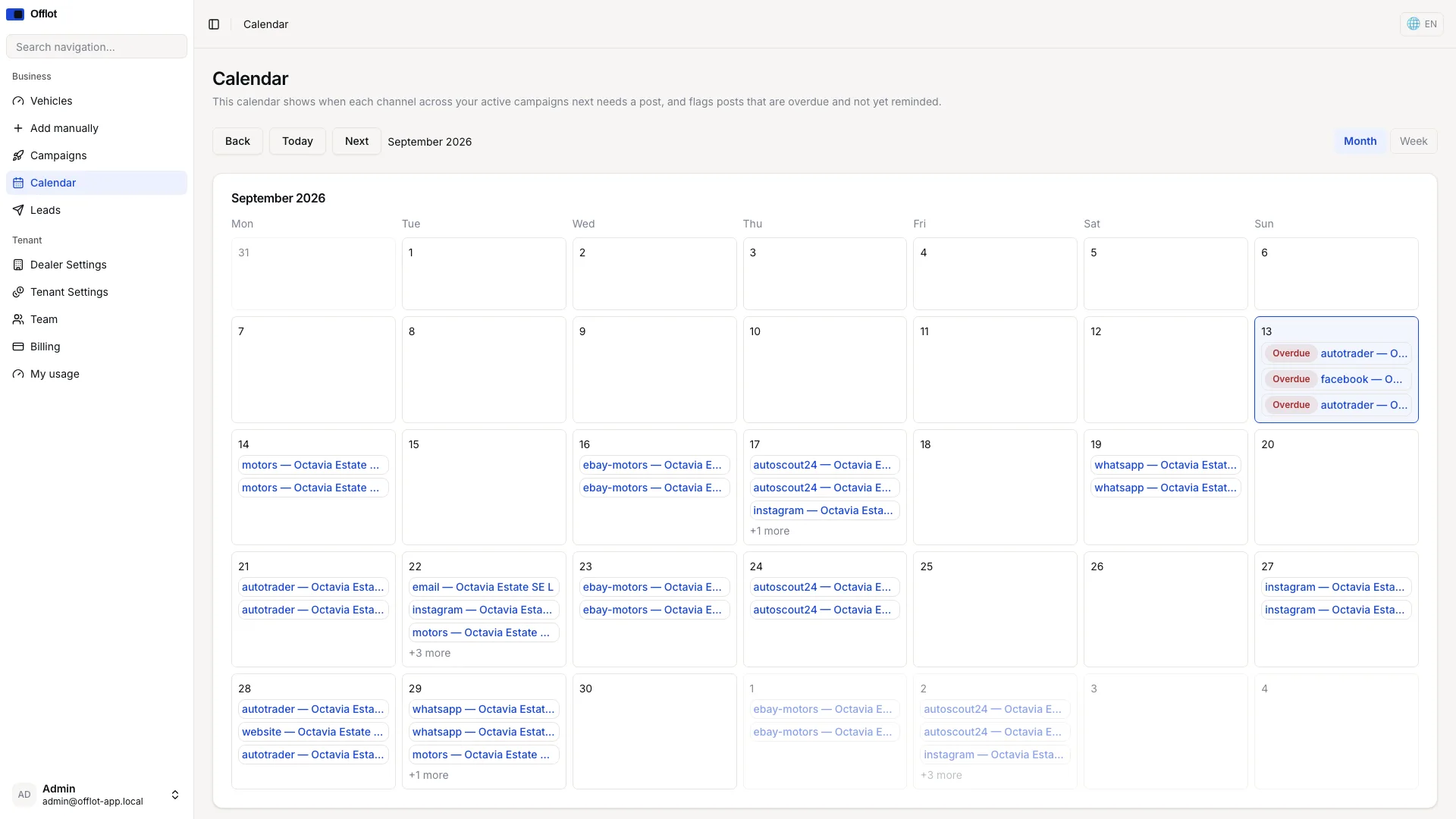
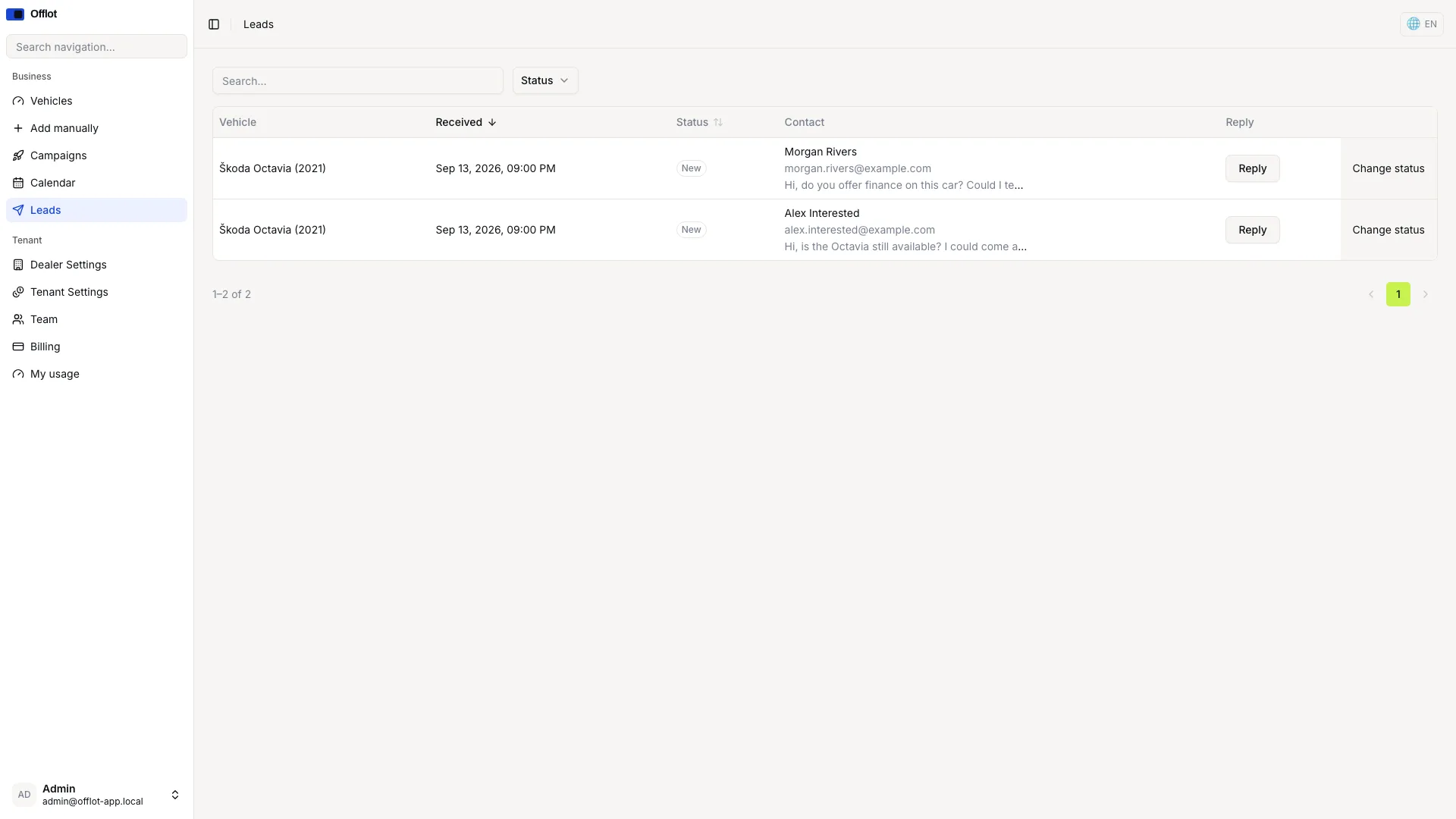
  • The workflow continues after generation: Generated content connects to campaigns, a calendar, a public vehicle page, enquiries and leads, not just a text response.
offlot · Channel texts
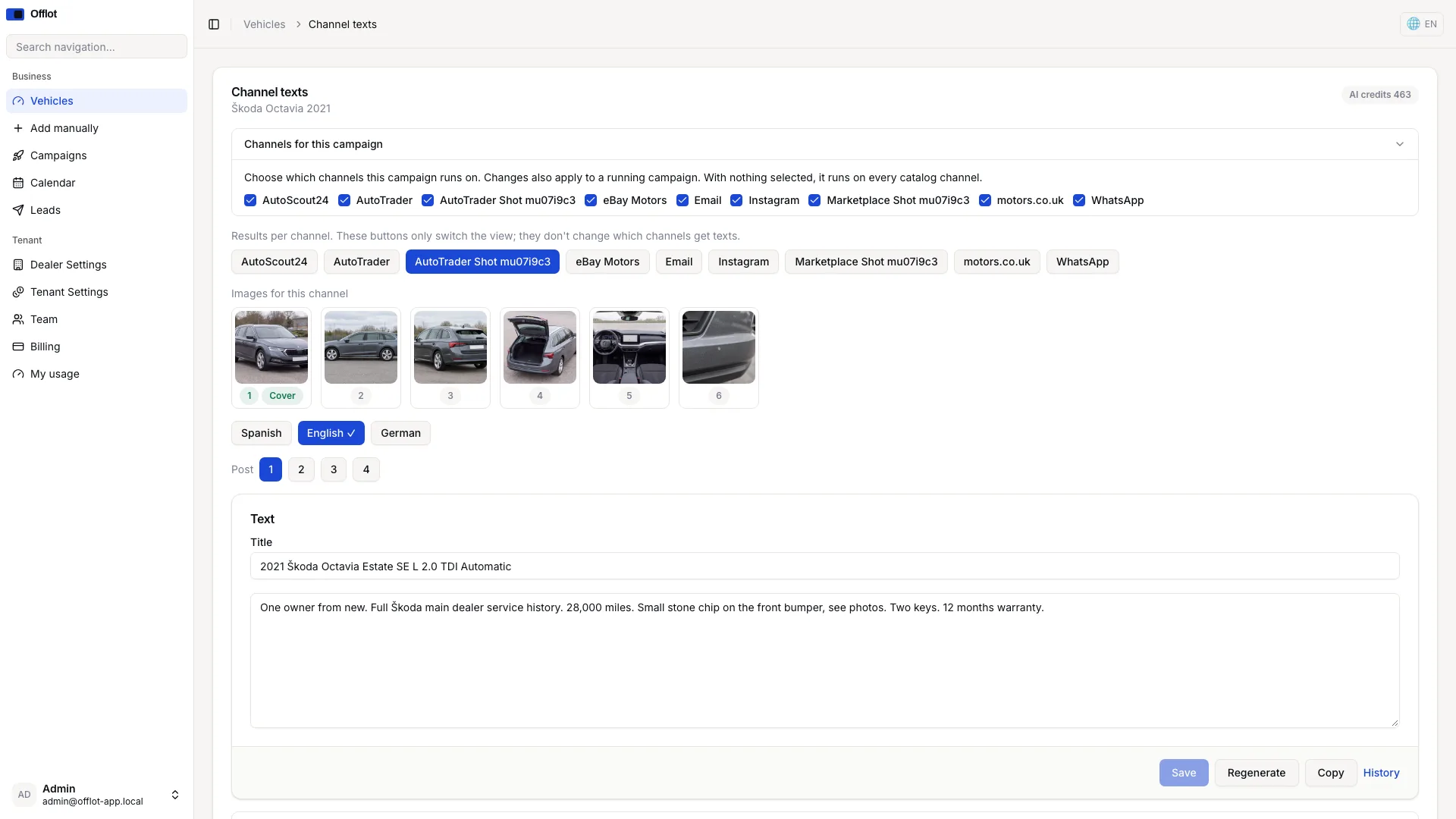
Offlot channel text screen showing vehicle photos, selected channels and generated copy
See the Offlot site →Talk through your workflow
offlot · Vehicle intake
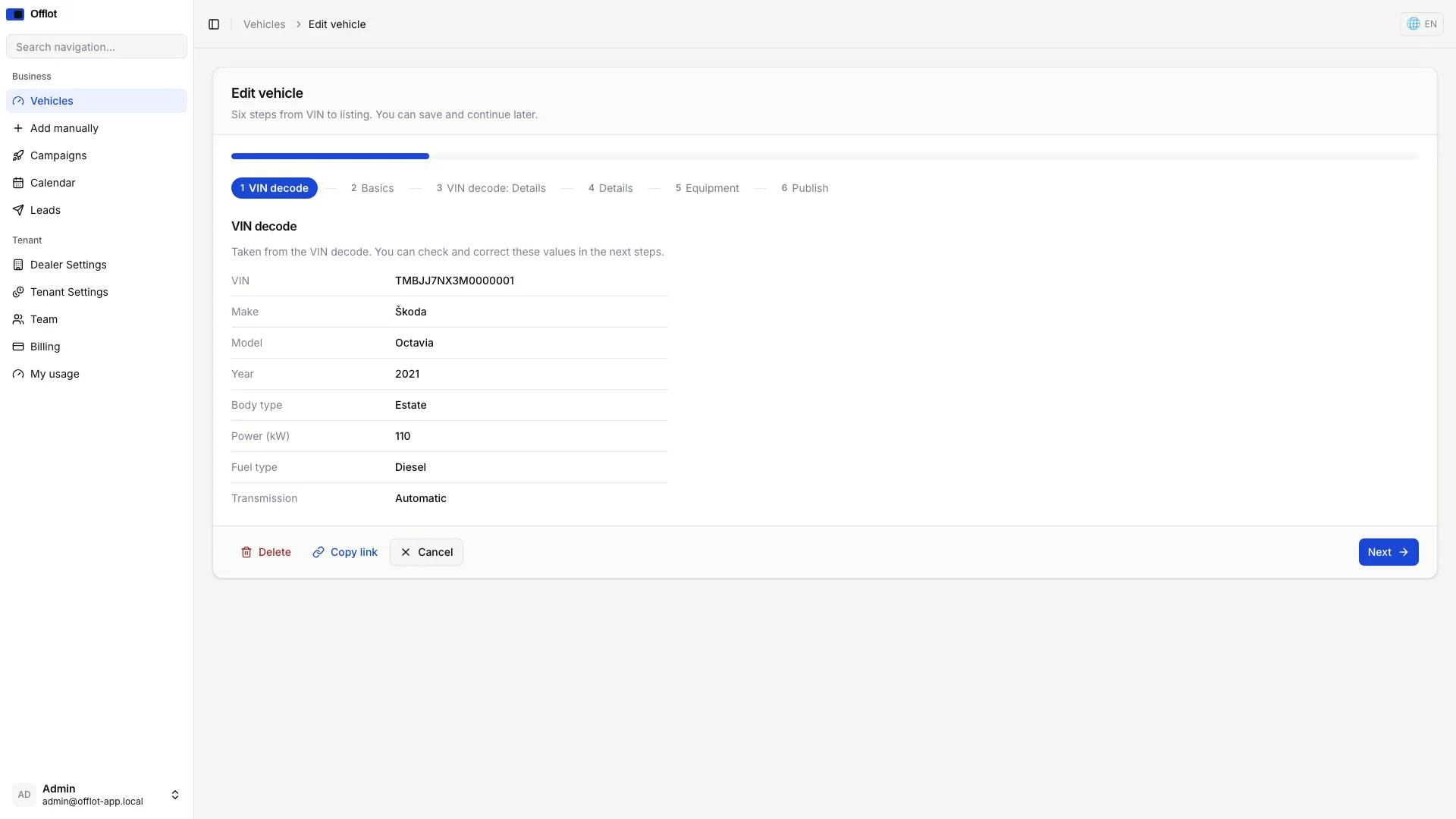
Offlot vehicle wizard showing decoded VIN facts
offlot · Calendar
Offlot campaign calendar showing channel publishing tasks
offlot · Leads
Offlot leads list showing enquiries connected to vehicles

The workflow is the product

A chatbot can return text. Offlot carries the result through a business process:

VIN or VIN photo, on to vehicle data, photos and dealer details, channel copy, campaign calendar, public vehicle page, enquiry and lead.

The current starter catalog contains seven channel configurations for each of the GB and ES markets, including marketplaces, WhatsApp, Instagram and email. Those channels are currently configured for guided publishing; this showcase does not claim automatic publishing integrations.

What is individual, and what is reusable?

Offlot contains the automotive-specific logic: vehicle intake, VIN decoding, campaign entities, channel rules, photos, plate review, public vehicle pages and leads. Kumiko supplies the parts that every serious multi-tenant application needs around that logic: identity, tenant boundaries, files, jobs, secrets, notifications, data rights, tiers and operational screens.

The framework does not replace product thinking, but it keeps product teams from spending the same time rebuilding the platform underneath every product.

How it is built

Offlot owns the domain logic. Kumiko supplies the repeatable platform.

VIN photo + vehicle intake

AI output becomes structured vehicle data

The VIN-photo step returns a validated VIN-shaped result, which feeds the vehicle intake flow. VIN facts are combined with dealer-provided details, photos and publish checks.

Plate detection + image review

AI output remains reviewable

Number-plate detection returns regions for review. The app keeps a manual review step before redacted images are used publicly; no claim of perfect automatic detection is needed.

Channel copy + prompt store

Different content for different channels

Channel copy is generated against structured vehicle facts and channel constraints. Prompts are resolved through a tenant-scoped, versioned prompt store and can be tested in the AI dry-run screen.

Provider adapters

The AI provider is replaceable

The current app mounts an Anthropic adapter and an OpenAI-compatible adapter. Provider and model policy are resolved through the AI foundation and pipeline layers rather than scattered through domain handlers.

Kumiko bundled-features

The platform work is composed in

The app composes auth, sessions, user and tenant identity, file storage, jobs, secrets, notifications, data rights, retention, tiers, caps and billing foundations alongside Offlot's own features.

What we can say precisely

The current offlot-app repository contains 21 app-owned feature modules, 293 production TypeScript/TSX files and 147 test files, including 54 integration tests. Its visible Git history runs from 12 August to 15 September 2026 (34 calendar days). That is repository history, not a claimed number of engineering days.

Build the workflow instead of another disconnected tool.

Offlot shows the division of labor: the custom effort goes into domain rules and AI quality, while the recurring SaaS foundations are composed from the platform.